2012

0

AFGHANISTAN: Power shortages hamper development

A market in Nangarhar province where electricity is rare

JALALABAD, 20 December 2012 (IRIN) – A lack of regular electricity in Nangahar Province in eastern Afghanistan is undermining reconstruction efforts and pushing families back into poverty, say business leaders in the provincial capital, Jalalabad.

The city stands on a vital trade route with neighbouring Pakistan and until a few years ago had factories and workshops producing soap, plastic household goods, marble stones, salt, cloth, pots and a variety of other goods.

A recent survey by the US Agency for International Development (USAID) and the Afghan Chamber of Commerce revealed 30 factories and workshops in the city have closed in the past few years because of a lack of power.

“There were 115 factories in 2011 but today there are 85 and if there is no electricity it could be reduced more,” Mohammed Qasam Yusufy, the local representative of the Afghan Chamber of Commerce, told IRIN.

“About 600 people have been left jobless by factories shutting down only this year,” he added citing electricity problems as the major cause.

Almost half the country’s external trade passes through the province, according to the Chamber of Commerce – including 70 percent of NATO supplies.

But provincial government officials say insecurity has delayed a planned power connection to Kabul’s Naghlo hydroelectric plant, which was due to provide 32 megawatts (MW) to the city, six of which to the Shikh Misry Industrial Park.

The proposed link has been undermined by insecurity in Uzbin District, Kabul Province, according to Muheburahman Mohmand, the provincial representative of Da Afghanistan Breshna Shirakat (DABS), the national power company.

“Only a few days ago, the enemy of our people destroyed an electricity pylon in Spir Kondy area of Uzbin District. We have shared our worries with the Afghan ministries of interior and defence but never received any positive answer,” he said.

“All the work is done, only a 1,000-metre-long power line has to be connected to the water dam to have power here in this province.”

The UN has identified energy as a major cross-cutting issue: “Energy is the golden thread that connects economic growth, increased social equity, and an environment that allows the world to thrive. Development is not possible without energy, and sustainable development is not possible without sustainable energy,” says the UN 2011 Sustainable Energy for All initiative.

Sardar Khan owns a factory in Jalalabad making plastic pipes, which cost him US$200,000 to set up. He employed 50 people but after two years of operation he has been forced to close: “The biggest challenge is power.” Using diesel generators makes his pipes far too expensive.

The lack of power has stalled an industrial sector with the potential to lift thousands of Afghans out of poverty. Shikh Misry Industrial Park was part of Jalalabad’s vision to launch its economy, but since being set up in 2006 it has yet to welcome a functioning factory.

Corruption

Jalalabad currently gets all its electricity from the Nangarhar 14 MW hydroelectric dam built by Russian and Afghan engineers in 1965. But civil wars and conflict have affected the maintenance of the facility, leaving only two of the three turbines to some extent operational.

''If they were bringing this power on a donkey it would have arrived here'' Ali Ahmad, security guard

The electricity is used to provide power to government offices and 4,000 houses, but can only supply a limited number of factories.

“It has been three years officials say power from Naghlo is coming. If they were bringing this power on a donkey it would have arrived here,” said Ali Ahmad, a resident of Majbor Abad village, who works as a security guard.

Last year he got his electricity from a fuel-powered generator which was used for 10 hours a day to power two fans and two light-bulbs. It cost US$40 a month – nearly half his salary.

“I do not know whether I pay for food, clothes and other household goods or pay for power. People who know officials or bribe officials have 24-hour power in their houses while my children got sick because of extreme heat.”

An official responsible for power distribution in Nangarhar Province said in one case power supplied to a government office was being delivered to 60 other buildings illegally. He estimated around 30 percent of electricity is lost in this way.

Meanwhile, off-grid solutions may help families in remote parts of the province that would have to wait decades for any possibility of a connection to the national grid. Eleven micro-hydro plants with a combined capacity of 125 kilowatts are being built in the province by the Energy for Rural Development in Afghanistan project at the Ministry of Rural Rehabilitation. It is hoped they will provide a power supply to 1,845 families at a cost of around US$600,000.

0

Afghans turn to AK-47, fearing Taliban return or civil war

Tue, 18 Dec 2012 00:13 GMT, REUTERS, By Martin Petty

KABUL, Dec 18 (Reuters) – Afghan father-of-four Mohammad Nasir has a secret he’s been keeping from his family.

The aid worker pulls a television bench out from the living-room wall of his Kabul home. Behind it is a carved out shelf, hiding what he hopes will keep loved ones safe when Western troops withdraw by the end of 2014 — an AK-47 assault rifle.

Arms purchases are soaring in Afghanistan, along with the price of weapons, a sign that many Afghans fear a return of the Taliban, civil war or rising lawlessness.

An assault rifle cost $400 a year ago. Today, some arms dealers are selling them for triple the price.

And it’s not just ordinary Afghans who are buying. Warlords who control militias, and former anti-Soviet mujahideen fighters are also boosting the trade.

“Whenever you turn on the TV or radio, the discussion is 2014. I’m not feeling safe now, it’s become like doomsday for Afghans,” said Nasir, 48, storing the polished second-hand rifle and slamming the TV unit back against the wall.

“People are saying security will collapse, or soldiers will join warlords or the Taliban, so we need something to protect our families when there’s a crisis.”

The brisk arms business is complicating the government’s efforts to pacify a country where the Taliban can strike virtually anywhere, ethnic tensions can easily ignite violence, and warlords are constantly jockeying for influence.

Afghanistan wants to project an image of stability ahead of 2014, a critical year when presidential elections will be held and the 350,000 Afghan security force will take over security.

Any upheaval could also encourage regional powers like Iran and Pakistan to try and gain influence before the Afghan endgame, a widespread fear among officials and ordinary Afghans.

President Hamid Karzai calls the talk of chaos, Western media “propaganda”, and says Afghan security forces have made great progress.

But for many Afghans, the threat of a descent into chaos is real so a growing number are investing in weapons, despite exorbitant costs. The average Afghan family earns only about $200 a month.

FEAR OF 2014 BATTLEFIELDS

Reuters spoke to buyers and sellers of illegal arms in five provinces and each cited the foreign troop withdrawal as the main driver of the underground trade.

“More people are buying weapons now, some to protect themselves from kidnappers and robbers and others in anticipation of things getting worse,” said a Kabul resident in his fruit shop, where a verse from the Koran on the wall calls for God to guide Muslims on a straight path.

He bought a handgun illegally for $500, a model his dealer says now fetches $1,000.

“If the situation changes in 2014 this area will once again become a battlefield between former warlords who are still powerful,” he said.

The government has highlighted 2014 as a year to invest in Afghanistan, which has relied on foreign aid for its economic lifeline, and take advantage of its cheap labour and land leases. Last month it held a televised conference promoting the country’s natural resources and its industrial potential.

In the 10 years following 2014, the government hopes revenues from oil, natural gas, iron, copper and other mining ventures will generate $4 billion in annual revenue.

But in the north, which is home to untapped oil and gas resources, warlords and their supporters are now re-arming for fear militants may seize power again, say residents.

Afghanistan’s largest foreign investment project, the Aynak copper deposit in Logar province, lies in one of the country’s most dangerous regions just south of the capital, Kabul.

Rocket attacks this year saw its Chinese workers temporarily flee the project, which is run by China Metallurgical Group (MCC) and Jiangxi Copper.

AK-47: A LEGACY OF WAR

Afghanistan has seen little peace in three decades. The American-backed mujahideen drove out the Russians in 1989 after 10 years of occupation, but American interest faded quickly.

Much of Kabul was later destroyed in a civil war and more than 50,000 civilians killed. The Taliban rose from the ashes of that conflict and imposed their austere brand of Islam.

Afghans fear they will be abandoned by the United States once again. Most don’t want the Taliban to return, so they are determined to protect themselves.

And there are plenty of weapons; arms left over from the war against the Soviets, guns smuggled over the porous border with Pakistan and those sold by former mujahideen commanders.

Russian or Pakistani-made AK-47 assault rifles are the biggest sellers, followed by light machineguns. In some areas, the militias go for rocket-propelled grenades.

To avoid arrest, arms dealers and sellers operate by word of mouth, avoiding cellphones which may be tapped by authorities. Deals are sealed in restaurants, homes or busy street markets.

Afghan authorities say they’ve had success in seizures of illegal firearms but concede that in a country with a turbulent history, their efforts may have little impact.

The government was deeply embarrassed when Energy and Water Minister Ismail Khan, an influential former warlord, recently called on militias to rearm to protect Afghanistan after 2014.

General Mohammed Najib Aman, a deputy of the anti-terrorism department at the Interior Ministry, denies the illegal gun trade is flourishing.

“Buying and selling of weapon, without being authorized, is…illegal and they will be arrested,” Aman told Reuters.

The government is encouraging people to seek licenses for weapons so the authorities can track guns. Aman estimates between 30,000 and 40,000 gun licenses have been issued.

But the positive message from the government and NATO-led force runs counter to the unease on the streets, where the Afghan security force has gained little public confidence.

“In my area there are lots of kidnappings, robbery and other criminal activities and also lots of fear of 2014,” said Shir Ali, speaking in his pharmacy in northern Kunduz Province. “I bought this very expensive Kalashnikov to protest my family.”

‘GUN CULTURE’ ENTRENCHED

At least 57 foreign troops have been killed by rogue Afghan security personnel this year. That figure represents about 13 percent of ISAF deaths in Afghanistan in 2012.

Lieutenant General James Terry, deputy commander of U.S. forces in Afghanistan, said the country’s “gun culture” was partly to blame.

“This is a society that’s really been traumatized by 30-plus years of war,” Terry said. “We also understand that a lot of grievances and dispute resolutions are done, frankly, at the barrel of a gun.”

Former mujahideen commanders in particular are cashing-in on the insecurity, using their wartime connections to acquire handguns and rifles and sell at inflated prices.

Islamuddin laid down his weapons after the Taliban was ousted in 2001, and became a used car salesman. These days that’s a front for his real money-making business.

He now sells light machine guns for 150,000 Afghanis ($2,900), double the value a year ago, and AK-47s for 60,000 Afghanis ($1,150), triple that of last year.

“People are worried, so they’re buying guns now because they might not be able to buy one when they most need it,” he said sitting in a hotel restaurant.

Militias also look to be heeding Ismail Khan’s call to arms.

“The number of sales and the price of guns has gone up and former mujahideen commanders who served warlords are buying more and more from us every day,” said one seller. “They’re anticipating civil war once the foreign troops leave.”

Not all Afghans expect a war. Waheed Mujhda, a politics expert at the Afghan Analytical and Advisory Centre, said even warlords realised renewed civil conflict would not help anyone.

“Having so many people owning guns is a big problem for the government, but it’s not a political problem,” he said. “There may be small conflicts after 2014, but civil war is unlikely. The last time, it was a failure that no one wants to see again.”

0

Kabul in Winter – Training and Production Goes On

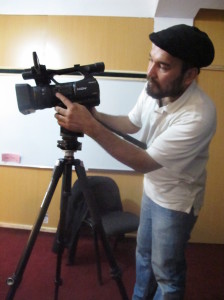
Kabul in DecemberDespite the winter weather, the trainees – 6 National Solidarity Program production staff – have completed preproduction research and story development and are heading to Jalalabad and Kapisa Provinces for production of three stories. Working in teams of two, teams will cover men’s Community Development Council (CDC) stories in in Jalalabad, and women’s CDC and election process stories in Kapisa.training in Kabul December 2012

CSFilm director Michael Sheridan is currently in Afghanistan conducting an intensive documentary filmmaking training for staff from the Public Communications Office at the National Solidarity Program (NSP). The training will culminate in the creation of a short documentary that illustrates the successes of this nation-wide, Afghan-led program that has empowered local communities to implement small development projects to respond directly to local needs.

Nangahar Production Day

Organized through 22,000 district level councils, NSP initiatives have resulted in over 55,000 development projects across the country – including power and irrigation projects, and the buidling of schools and clinics. These locally-run projects tend to cost a fraction of what is spent by International contractors and the US military, and are noted for their acceptance by locals and for their ability to create jobs for Afghans.

Kabul in Winter

The finished film will be shown as part of a US tour by NSP to encourage Congress to pledge ongoing funding and support. This is a fantastic opportunity to have Afghans tell their own development stories directly to decisionmakers, advocating for Afghan-run social and economic development initiatives.

0

Intern with Community Supported Film!

Internship: Administrative role with a focus on Communications, Social Media, Press Outreach, and Distribution

Community Supported Film is looking for an intern to play a key role in helping this young organization grow and communicate its mission, primarily by assisting in the day-to-day operations of this start-up nonprofit, distribution of our Afghan-made film, The Fruit of Our Labor, and helping to expand our network and impact.

Download the Administrative, Distribution, Press and Social Media Internship Description


Internship: Post-Production Video Assistant

Community Supported Film and SheridanWorks are looking for an intern to assist with video post-production.

Download the Video Post-Production Internship Description


Internship: Public Relations Assistant

Community Supported Film is looking for an intern to assist with press outreach, publicity, and communications.

Download the Public Relations Internship Description

5

Watch the Video Conference: Afghan Civil Society in Conversation

The Way Forward: An Afghan Conversation

Watch a recorded video conversation with Afghan Civil Society Activists here.

Afghanistan is like a cancer patient that accidentally survived, with too many doctors giving everything they can rather than listening to what this patient wants, and allowing it to walk on its own. – Hassina Sherjan

We are living in a new era… If you look at the number of youth – the ambitions and the progressive spirit that not only the youth, but a bigger proportion of society has – it’s incredible. - Najib Sharifi

Click here to check out the Twitter Summary for December 06, 2012

Download Press Release

Sign up to get notifications about other events and information regarding Afghan Civil Society.

Watch the live conference call with Afghan Civil Society activists (see bios below) to learn more about the current situation in Afghanistan.  With upcoming milestones such as the removal of NATO/US forces and presidential elections to replace Hamid Karzai after 10 years of rule, it is an opportune time to have a discussion about the positive role U.S. civil society can play at this crucial junction in history.

The way the war in Afghanistan ends for the United States may be very different than the way it ends – or doesn’t end – for the people of Afghanistan.  In the US, the discussion is often framed through military strategy, and rarely includes Afghan perspectives.  How will Afghans cope with the upcoming transitions, such as the removal of NATO forces and the Afghan Presidential elections in 2014, and what is an appropriate and responsible role for the US?

Organized by:

Community Supported FilmAmerican Friends Service Committee

Bios of Participants in Kabul, Afghanistan:

Sayed Ikram Afzali is the co-founder and president of Youth in Action Association – a non-profit youth-led organization dedicated to enhancing peace and sustainable development in Afghanistan. He has been a youth advocate and development professional for the past decade focusing on peace building and anti-corruption issues. With an aim to help rebuild Afghanistan, Afzali returned to Afghanistan after 20 years of refugee life in Pakistan. Affected by years of conflict in the region, he has been a strong believer in bringing about peace through youth using non-violent approaches – such as using sport as a vehicle for peacebuilding. Sayed has also worked with the United Nations and other national organizations for more than seven years in the area of democratic governance with a focus on civil society and anti-corruption. He is currently Head of Advocacy and Communication at Integrity Watch Afghanistan (IWA)

Integrity Watch Afghanistan (IWA) was established as an independent civil society organization in 2006. IWA’s mission is to put corruption under the spotlight by increasing transparency, integrity, and accountability in Afghanistan through the provision of policy-oriented research, the development of training tools, and through facilitation of policy dialogue.

Hassina Serjan is the Founder and Chief Executive Officer of Aid Afghanistan for Education and the owner and Chief Executive Officer of Boumi Company – an internationally recognized women-owned home accessory business. Hassina co-authored the book Toughing It Out in Afghanistan, and has published numerous op-eds in the New York Times, The Washington Post, The Guardian, USA Today, and more. She received a Master’s of Public Administration from Harvard Kennedy School and has an Honorary Doctorate of Law degree from Queen’s University in Canada.

Aid Afghanistan for Education (AAE) is dedicated to empowering Afghans and rehabilitating the education system in Afghanistan, and provides primary and secondary education for marginalized Afghans. Boumi – Farsi for “indigenous” – manufactures Afghan-made products with raw materials produced in Afghanistan, supplying high-end products to the global marketplace.


Najib SharifiNajib Sharifi 
is the Founder and Director of Afghanistan New Generation Organization.  Najib is a medical doctor by training, but over the past ten years he has worked for some of the leading news organizations around the world including the New York Times, BBC, CNN, National Public Radio and the Washington Post.  He has researched for the Afghanistan Research and Evaluation Unit and Human Rights Watch.  In addition, he served as senior political officer for the Office of the Special Representative of the EU for Afghanistan.  In 2009, Najib won a Humphrey/Fulbright scholarship and studied public policy and leadership at the University of Maryland, College Park.  Najib’s analysis and opinion pieces have appeared on various Western media outlets including South Asia Global Affairs and the foreign policy magazine.  He is a frequent commentator of issues of domestic Afghan politics and foreign policy of the Western countries towards Afghanistan on Afghan and international media.

Afghanistan New Generation Organization is a non-profit youth empowerment organization with aims to empower the youth to become competent community advocates by providing training in such areas as public speaking, media literacy, and use of information technology among others.

Michael SheridanMichael Sheridan, Director and Founder of Community Supported Film, is a filmmaker, educator and activist. For nearly 20 years Michael has engaged the public in stories from Asia, Africa and the Americas about people in poor and developing communities challenging the status quo and struggling to improve their lives. Michael co-founded Oxfam America’s documentary production unit and has sought to break new ground in the effective use of media to educate and change policy. He has taught documentary filmmaking for 15 years at the community and university level, extensively in the United States and Afghanistan, and as a Fulbright Scholar in Indonesia.

Community Supported Film strengthens the documentary filmmaking capacity in crisis and post-crisis communities where the dissemination of objective and accurate information is essential. Local women and men are trained to produce stories on their community’s socioeconomic issues, and the resulting films are screened in audience engagement campaigns. Michael founded Community Supported Film in 2010 with a pilot program in Afghanistan that resulted in the production of 10 Afghan-made films, The Fruit or Our Labor. Michael also runs his filmmaking company SheridanWorks.

Moderated by:

Peter Lems

Peter Lems is the Program Director of education and advocacy for Iraq and Afghanistan at the American Friends Service Committee. He is also the co-coordinator of the Wage Peace campaign, a program initiative that seeks to wage peace with the same determination and energy that nations wage war.

The American Friends Service Committee carries out service, development, social justice, and peace programs throughout the world. Founded by Quakers in 1917 to provide conscientious objectors with an opportunity to aid civilian war victims, AFSC’s work attracts the support and partnership of people of many races, religions, and cultures.

Page 1 of 2012345...1020...Last »