

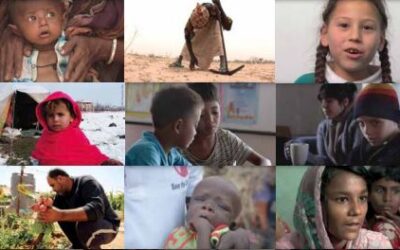
The completion of our October/November 2010 production training is only the beginning of our work. From now on, selected trainees and more experienced members of the Afghan documentary filmmaking community will partner on the making of the film Brewing Tea in a Kettle of War (BTKW). Their first task is to work on the complex and rigorous work required to identify the four villages that meet the criteria desired for the telling of the story.
From the perspective of Afghan villagers, the film will explore the benefits of bottom up versus the costs of top down development approaches and the impact of local versus foreign ownership of the process. Specifically, international audiences will experience the three dominant methods of delivering aid: 1. Foreign soldiers taking a direct role in economic development through the “hearts and mind” strategy of the military’s counterinsurgency doctrine; 2. The reconstruction work of foreign aid-agencies and contractors, and 3. The work of the Afghan government’s highly acclaimed National Solidarity Program.
These parallel stories will allow the international community a unique insight into the effectiveness and sustainability of these different approaches as both external and internal forces struggle for peace in war-weary and self-determined Afghanistan.
Expanding Goals
After two years of developing Brewing Tea in a Kettle of War, one year of establishing Community Supported Film and now the completion of the training, we have decided that the work here should be ongoing and look beyond the making of the Brewing Tea in a Kettle of War. The repeated refrain we hear from funders and Afghan filmmakers is how will this work be sustained.
With your support we plan to extend our work to focus on guiding and supporting our trainees and other afghan filmmakers as they seek to submit production proposals and earn work on commissioned films. This is going to mean a lot more fundraising and infrastructure development but the work has taken on a life of its own that is presenting a clear directive that is exciting and doable. We appreciate every bit of support you can offer this work.

0 Comments